Drywall and Plaster Repair in Chanute, KS
Cracked plaster, punched-through drywall, ceiling rings and soggy basement walls, repaired with the dust sealed inside the work zone and the surface texture copied so the patch settles quietly into the room.
Once you ring, the drywall pro covering Chanute calls back, listens to the specifics and books your quote.
Call 7 days, 7am–9pm
Five minutes before dialing: what protects the room and sharpens the quote?
A little groundwork makes that first conversation about the wall far more productive, and two of these steps guard the house while the repair gets arranged. All six use nothing fancier than a smartphone and a tape.
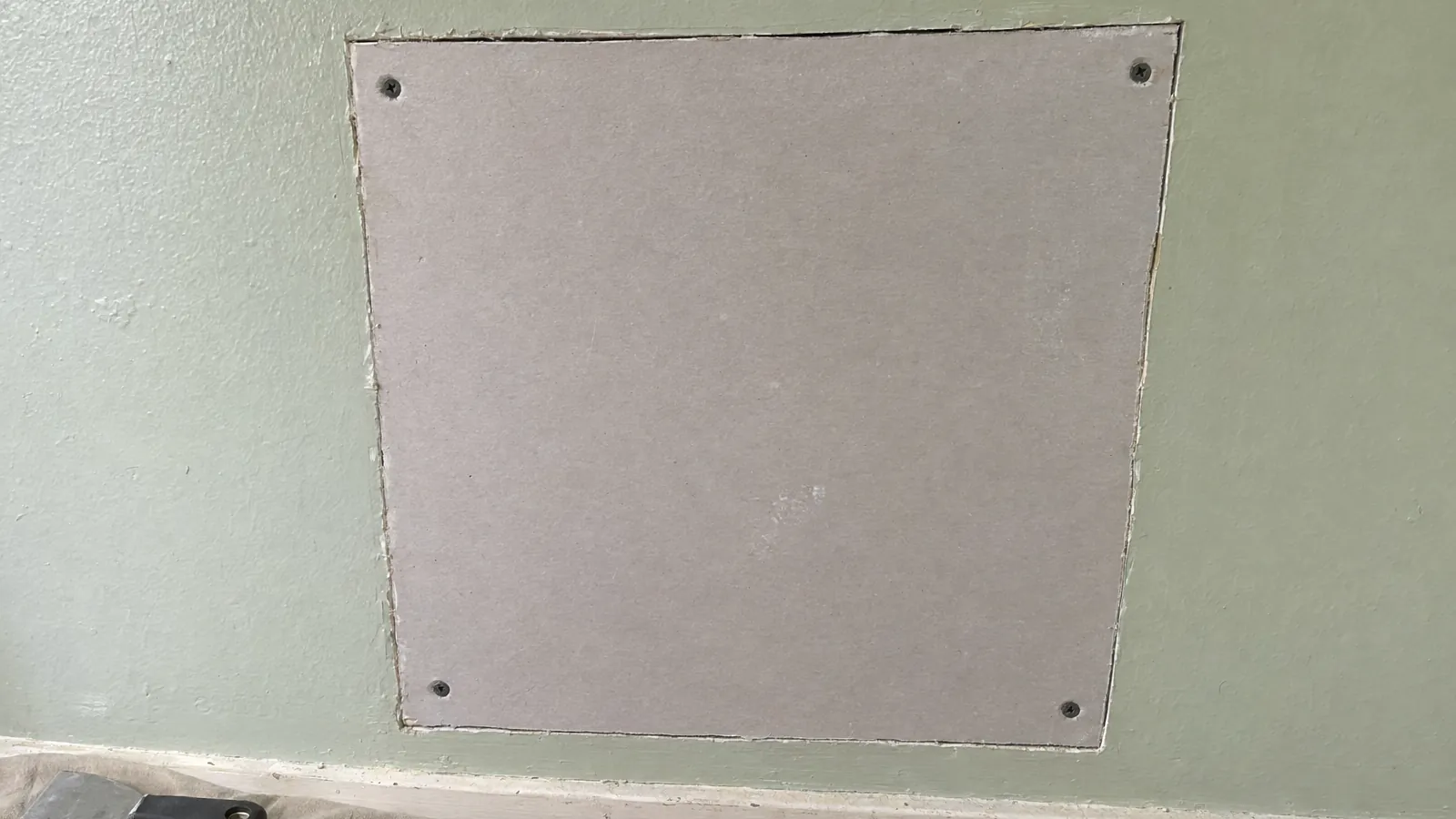
Kill the circuit near the wet spot
Locate the panel switch for every fixture, fan or outlet in a damp ceiling or wall and click it off. Live wiring sharing a cavity with water is the real hazard here, far more than the drywall itself.
Close the supply valve
If plumbing is the culprit, close the little valve under that sink or toilet, or the main where the water line enters the house. Patching a wall that keeps soaking up water just buries the trouble under new paint.
Two pictures, one far and one near
Frame the entire wall or ceiling in one shot, then move in close with a tape stretched alongside the damage. That pair settles most early questions about scale and surface finish.
Note the length and the location
Jot down how far the crack runs or how wide the opening is, plus whether it starts at a door corner, a window or a joint between sheets. Position often hints at the cause.
Tap test: plaster or board?
Knuckle-rap the surface next to the damage. A dense, flat thud usually signals plaster over wood lath, typical of houses finished before drywall caught on; a papery, hollow knock points to gypsum board.
Give the work area elbow room
Shift furniture, rugs and breakables a few feet away so plastic sheeting and drop cloths can go down before any sanding begins.
Is this a this-week problem or a someday problem?
Plenty of cracks can sit. What matters is whether the damage is still changing, or whether it puts people or wiring in harm's way. Here is how the familiar problems sort themselves.
Worth booking without delay
- A ceiling sagging or ballooning with water.Power comes first: turn off the breakers for that ceiling's lights and fans. Then move people and furniture out of the drop zone and park a bucket under the sag's deepest point. Soaked gypsum keeps little of its strength and can let go.
- Overhead plaster that flexes when pushed.Ceiling plaster that flexes has lost the plaster keys that once locked it to the lath. It should be fastened back or brought down deliberately rather than left to drop by itself.
- Board that still feels damp a day after the drip ended.Paper-faced gypsum that stays wet invites mold on its face and inside the bay, which is why wet sections are normally removed when the plumbing or roof work wraps up.
- A crack that grows week to week.Pencil a tick and a date at both ends. Should the line creep past those ticks within a month, or doors start rubbing their frames, something structural is shifting and the framing needs attention too.
Safe to leave for a quieter month
- Hairlines that haven't budged.A stable hairline is cosmetic. Let it wait until other small repairs can be grouped with it.
- Popped nails and screws.Little round bumps lined up along a stud are fasteners working loose. Unsightly, though harmless to the wall.
- A dry, faded water ring.When the leak was fixed long ago and the spot stays dry, it needs sealing and paint, nothing urgent.
- A doorknob punch or a moving-day gouge.Provided nothing behind it got damaged, this kind of hole won't spread while it waits.
When water started it, the step-by-step guide for the first hours after a leak explains drying and testing before anything gets cut.
Which four kinds of wall and ceiling trouble get booked here?
Each page below covers why the damage happens, what a durable fix requires and which warning signs matter, so you can match it to whatever is in front of you.
- 01
Cracked plaster, cracked board
Hairlines, stair-step lines off door corners and plaster that has let go of its lath, reopened, reinforced and refinished.
Crack repair for plaster and drywall walls - 02
Basement walls that took on water
Soaked lower walls trimmed back to sound board, the bays aired out, and moisture-resistant panels hung clear of the concrete.
Repairing water-damaged basement drywall - 03
Rings and drips on the ceiling
Yellow-brown rings followed back to the leak, locked in under a shellac or oil primer, then textured to match.
How ceiling stains get sealed and blended - 04
Holes, from anchor-sized to fist-sized
Shelf-anchor pocks, doorknob punches and bigger breaks, backed where they need it and finished flush with the wall.
Patching holes in drywall and plaster
Spot patch, full skim or fresh board: which one fits your wall?
Nearly every wall or ceiling repair lands in one of three approaches. They differ in how much surface gets opened, how much grit they throw off and what sort of damage they handle. The table lines them up.
| Spot patch | Skim coat | New section of board | |
|---|---|---|---|
| Best suited to | Openings and cracks no bigger than a palm | A wall crowded with small cracks, old fixes or torn facing paper | Waterlogged, crumbling or moldy gypsum, or breaks spanning more than one stud bay |
| How much is opened | Nothing, or a small square trimmed to firm edges | Nothing removed; a thin layer covers the whole face | Bad gypsum cut away until the edges land on framing |
| Dust to contain | Light; sanding is limited to the patch and its feathered border | Heavy; an entire wall gets sanded, so plastic sheeting and a HEPA vacuum matter most here | Moderate; cutting throws a burst of grit, then the joints get sanded |
| Coats and drying | Two or three thin passes, each left to dry | Two or more passes over the full wall | Tape, three passes on each joint, then texture |
| On a plaster wall | Fine on firm plaster using a chemically setting mud | Frequently the smart pick for plaster that is crazed yet still tight to the lath | Calls for shims so the gypsum lines up with the thicker plaster face |
Unsure which approach your wall calls for? A photo generally answers it. The pro who phones back can judge from size and surface what makes sense, and the price is built around that method.
Turning over a Chanute rental: how do wall repairs fit the schedule?
Census takers in 2020 logged 4,108 homes and apartments in Chanute, about one in seven of them empty at the time. An empty unit between leases is the easiest window for wall work: nothing to move and nobody breathing the dust.
- Group the rooms
- Put every hole, crack and stain in the unit into a single message. Pricing a batch beats starting fresh for each room, and the drying periods overlap rather than piling up.
- Working around a tenant
- With someone still living there, honor the notice period in the lease, and ask for plastic sheeting to seal the work zone so the rest of the home stays usable.
- Budget days for paint
- Mud must cure completely before primer goes on, and primer before topcoat. Planning for that keeps the next tenant from moving in beside tacky walls.
- Hold on to move-out pictures
- Dated pictures from the final walk-through make it easier to tell normal wear from damage when the deposit gets settled.
Following a leak or an impact, what should your notes include?
Whether the damage ends up with an adjuster, a landlord or just a folder in your desk, a log started early beats one pieced together later. This is about record-keeping, not about what any policy covers; only the insurance company can say that.
- When you first spotted the damage, and when the water flow ended.
- The likely source if known: a supply line, the roof, a window, an appliance or groundwater.
- Room-wide pictures first, then close-ups with a tape measure visible. Shoot the ceiling as well as the walls.
- Tide lines on baseboards, swollen trim, a stained carpet pad and anything stored against the wall.
- Material removed ahead of the repair: bag a sample, or photograph it next to a ruler.
- Receipts for fans, a rented dehumidifier, or whichever plumber or roofer stopped the leak.
Request an itemized quote. Separate lines for tear-out, drying, new board and finishing are simpler for an adjuster or property owner to follow than a single lump figure.
What does a Neosho County year do to plaster and drywall?
NOAA's 1991–2020 climate averages put Chanute in a humid subtropical pattern: frosty nights, a drenching spring and sticky summers. Each season marks interior walls differently.
Sunny thaw, overnight refreeze
January highs average 41.2°F while lows average 21.9°F. Snowmelt off a sun-warmed roof can freeze again at a cold eave and form an ice dam; meltwater trapped behind it then appears as tea-colored streaking near the top of an outside wall. Snowfall averages under ten inches a year, so this is not a yearly event, yet one snowy week can do it.
May downpours
May is Chanute's wettest month, averaging a little over seven inches. Saturated soil presses water toward basement walls and storms test tired roof flashing, so lower-wall wicking and new ceiling rings often show up around then.
Muggy July and August
Thick summer air keeps joint compound and paint soft for longer, so each coat needs extra hours before the next. An attic condensate line that clogs can also mark a ceiling nowhere near a roof leak.
Furnace-dry January air
Heating season wrings moisture out of studs and old plaster. Joints and plaster cracks tend to widen slightly in cold months and tighten in warm ones, which is why ordinary spackle in a moving crack seldom survives.
Newer framing, fresh cracks: should a recent house worry you?
Age isn't the only culprit. Homes and additions framed in recent decades develop their own predictable cracks, and most turn out harmless once the reason is clear.
- Nail and screw pops
- Studs shrink while they dry out across their first several heating seasons, nudging fastener heads through the mud. A typical cure: set a new screw about an inch from the original, sink the loose head, and spot it over.
- Truss uplift
- With certain roofs, truss bottom chords arch upward each winter because the attic side dries while the heated side stays damp. The ceiling pulls off an interior partition, leaving a corner gap that widens in winter and shuts in summer. New tape alone won't survive that; a lasting answer uses floating clips at the ceiling edge, or crown trim fixed to one surface only.
- Corners of doors and windows
- A slanting line from the corner of an opening is the classic settling crack. When thin and steady, it gets mesh tape and setting mud. When the door has also begun to stick, the framing deserves a look before the crack is refinished.
Humboldt to Thayer, Stark to Earlton: which towns get covered?
Besides Chanute itself, repairs are booked across six smaller towns spread over Neosho and Allen counties.
- Humboldt, up Old 169 toward Iola, beside the Neosho River.
- Iola, seat of Allen County, beyond Humboldt to the north.
- Earlton, just a short hop south.
- Thayer, farther south, platted in 1870 as the railroad pushed through.
- Erie, seat of Neosho County, off to the southeast.
- Stark, out east along K-201.
What do people want answered before the first coat of mud?
Can new texture blend with the orange peel or knockdown already there?
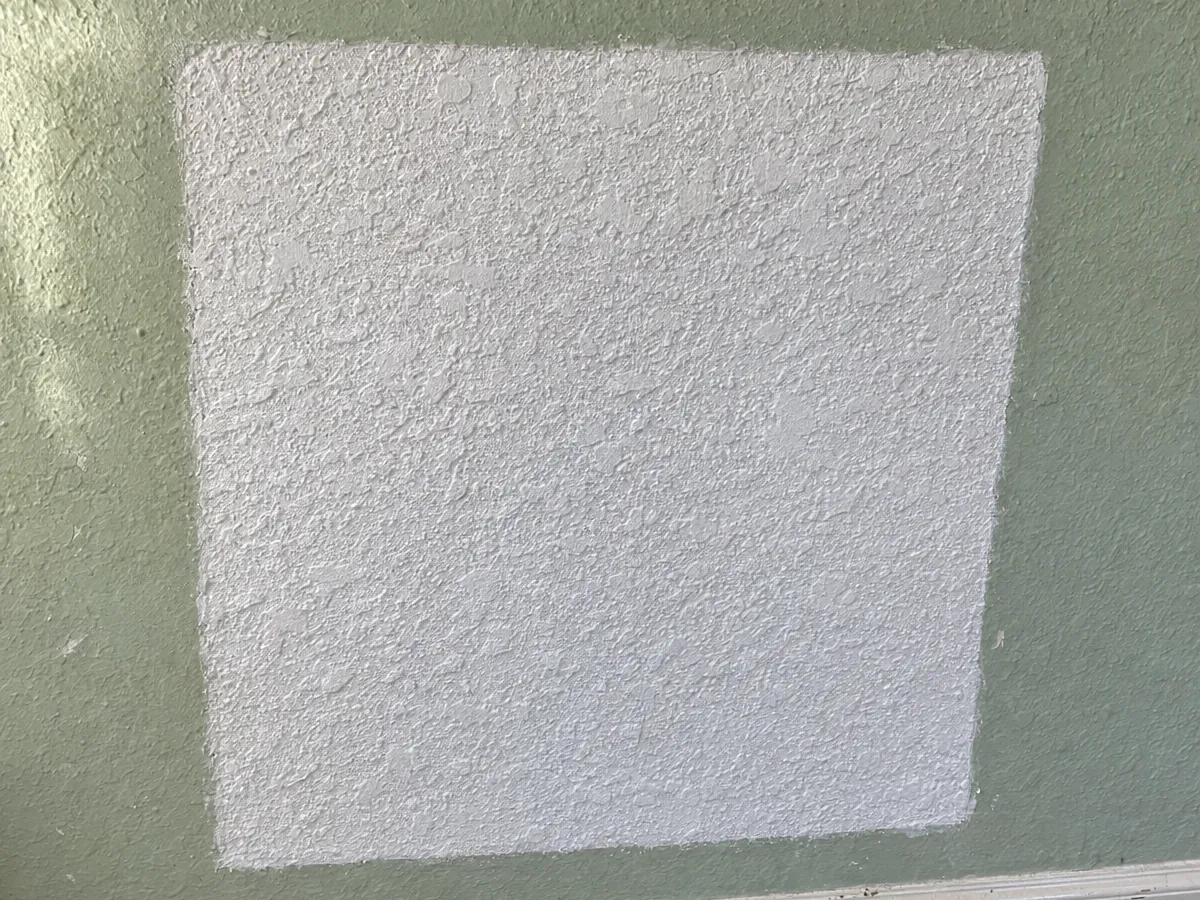
Matching belongs to the job rather than being an add-on. Orange peel, knockdown, sand finish and smooth plaster each want their own mix and applicator, and a careful repair trials the texture on scrap board first, then carries it a bit past the patch edge. A close-up shot with light raking sideways across the wall lets the pro bring suitable materials.
Would anyone take on a single anchor-sized hole?
No, little jobs are fine. If two or three other spots around the house need attention, mention them together; drying takes most of the time on small patches, so extras barely stretch the schedule.
Could a primed patch still look dull once painted?
Fresh compound soaks up topcoat thirstily while the old painted wall beside it does not, leaving a dull halo painters call flashing. A coat of primer over the repaired area before the topcoat is what heads that off, so ask for primer in the price if the painting will be yours to do.
How many days should a typical patch be expected to take?
Most patches want two or three passes of compound with drying between, so even a modest fix usually stretches beyond one day. Wet board that comes out waits for the bay to dry first. Expected timing is spelled out alongside the quote.
What keeps sanding grit from reaching the bedrooms?
Request plastic across doorways, covered floors, and a HEPA-filtered vacuum hooked to the sander or used during cleanup. Turning the forced-air furnace off while sanding keeps fine dust from traveling through ductwork to other rooms.
Why does one repair price out higher than another?
Size and reach drive it first: ceilings need more setup than walls, stairwells more than bedrooms. Plaster generally involves more steps than gypsum board. Texture matching, how many rooms get done together, any wet material that must come out and dry, and a request to include the final paint coat all shift the figure, and the quote itemizes them before work begins.
Why is a ceiling repair fussier than a wall repair?
Ceilings get ignored until something appears, and they are tougher to repair neatly: mud fights gravity, daylight from windows skims across every ridge, and sanding grit rains onto whatever sits below.
- Stains
- A yellow-brown halo means water got into the gypsum at some point. Before paint, a proper repair confirms dryness with a moisture meter, then locks the mark in under a shellac-type stain killer; standard ceiling latex lets the halo seep back.
- Sagging or bulging
- Step one is cutting the circuit for that ceiling's light or fan at the panel; step two is keeping the floor beneath it empty of people and animals. Only once the circuit is dead should a small puncture drain the pocket into a bucket. Gypsum that drooped usually needs replacing, since soaked-then-dried board stops holding screws.
- Cracks along the wall line
- A crack reopening each winter right at the junction of ceiling and inner wall is frequently truss uplift, explained in the newer-house notes above.
- Popcorn and acoustic texture
- Sprayed acoustic finish is tricky to match and messier to strip. Popcorn applied prior to the 1980s sometimes included asbestos; send a chip to a lab first, and hold off on scraping or sanding until the result comes back.
- Seams showing through
- Long, ruler-straight lines overhead are usually joints where the tape lifted or the mud shrank. Re-bedding the loose run and feathering it broadly flattens the surface again.
Everything involved in repairing a stained or sagging ceiling in Chanute begins with tracking down the water.
Would a call back about the damage help?
Fill in the basics or ring the number next to the form. A texted picture helps most, since texture and scale read better from an image than from a description.
Once you ring, the drywall pro covering Chanute calls back, listens to the specifics and books your quote.
Call 7 days, 7am–9pm
Hitting send means Chanute Drywall Repair Pros, plus the nearby pro quoting this work, may follow up regarding it on your phone, by voice or text. Privacy notice
Whatever you write goes straight to the drywall pro serving this area, who rings back to work out the price.